

 Stay-In-The-Know Newsletter
Introduction: In a world where denim is often associated with fashion and comfort, there’s a day when it symbolizes something far more profound – a stand against sexual violence. Denim Day, observed annually, is not just about wearing jeans; it’s a powerful statement of solidarity with survivors and a call to action for change.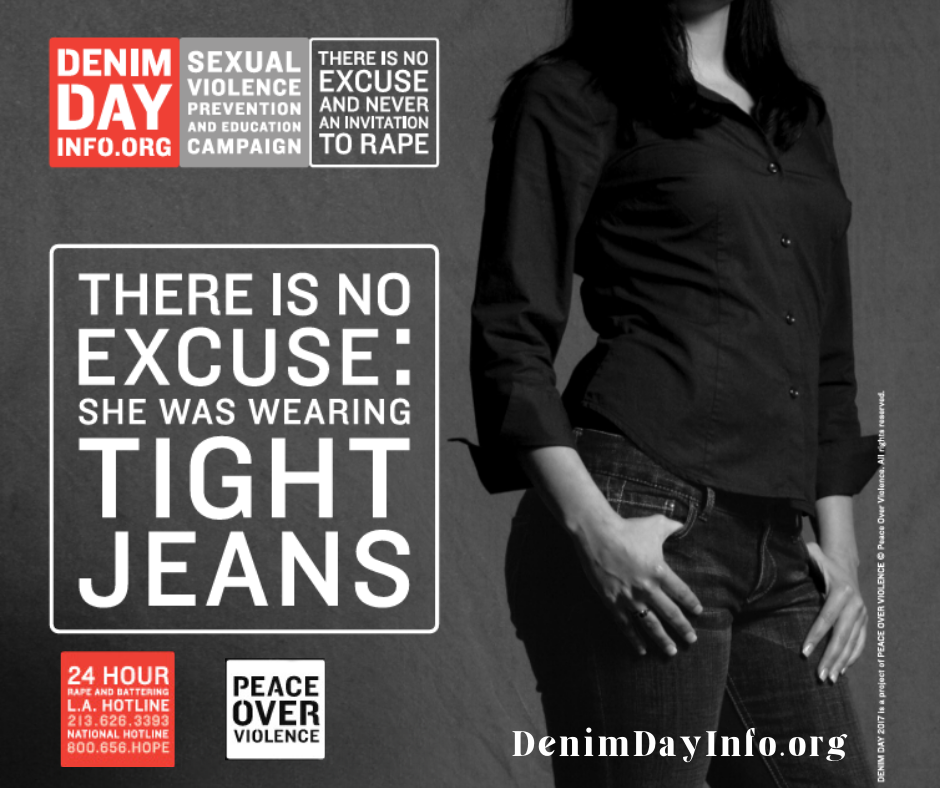
Understanding Denim Day: The origins of Denim Day trace back to a landmark case in Italy in the 1990s. Shockingly, the Italian Supreme Court overturned a rape conviction, citing the victim’s jeans as a sign of consent due to their tightness. This sparked outrage and led to a movement where women in the Italian Parliament wore denim to protest the decision, standing in solidarity with the survivor. Since then, Denim Day has grown into a global movement, spreading awareness about sexual violence and challenging harmful attitudes and misconceptions.
Raising Awareness: Denim Day serves as a reminder that sexual violence is not just a statistic; it’s a reality that affects individuals and communities worldwide. By wearing denim and participating in Denim Day activities, we raise awareness about the prevalence of sexual assault, the importance of consent, and the need for support and justice for survivors.
Empowering Change: Beyond raising awareness, Denim Day empowers individuals to take action. It encourages conversations about consent, respect, and healthy relationships. It urges institutions to implement policies that support survivors and hold perpetrators accountable. It inspires communities to create safe spaces where survivors are believed, supported, and able to seek justice without fear of stigma or retaliation.
Call to Action: On Denim Day and every day, we have the power to make a difference. Here’s how you can get involved:
-
Wear denim: Show your support for survivors by wearing denim and sharing the significance of Denim Day with others.
-
Educate yourself: Take the time to learn about consent, healthy relationships, and the resources available for survivors in your community.
-
Speak out: Use your voice to challenge harmful attitudes and behaviors that perpetuate sexual violence. Advocate for policies and initiatives that support survivors and prevent future incidents.
-
Support survivors: Offer empathy, validation, and resources to survivors in your life. Let them know they are not alone and that you believe them.